إجمالي مرات مشاهدة الصفحة

The Medicine Portal

الأحد، 14 نوفمبر 2010

Sexological testing _ Sexuality


Sexuality can be inscribed in a multidimensional model comprising different aspects of human life: biology, reproduction, culture, entertainment, relationships and love.[1]
In the last decades, a growing interest towards sexuality and a greater quest to acknowledge a “right to sexuality” has occurred both in society and individuals. The consequence of this evolution has been a renewed and more explicit call for intervention from those who suffer, or think they suffer from alterations of their sexual and relational sphere.
This has produced an increased attention of medicine and psychology towards sexual dysfunctions and the problems they cause in individuals and couples. Science has gradually adjusted already existing research tools, mostly used in other fields of clinical research, to the field of sexology, so completing and increasing the number of tools in the “toolkit” of various branches of sexological diagnosis.[2]


Psychological measurements cannot be considered as accurate as physical ones (weight, height, mass, etc.), as the former evaluate those aspects and variables pertaining to an "individual" whose individuality refers to his/her own psychological, personological and environmental constituents: emotions, expressiveness, senses, feelings and experiences which can greatly vary according to the subjects and change in the short period or depending on different settings, even in the same individual. What is expected of psychological measurements is "sufficient" accuracy and reliability, i.e. capability to express an indication or focus which clinicians can use as a “guideline” to rapidly and accurately deepen the aspects highlighted by the measurements and check them together with their patients.[3]
For this purpose, several statistical validation indexes of psychodiagnostic tests are provided: from standardization to various constructions of validity (internal, external, face, construct, convergent, content, discriminant, etc.).
There are several sexual dysfunctions and each of them has a different cause.
Therefore, the field of sexology provides different psychological evaluation devices in order to examine the various aspects of the discomfort, problem or dysfunction, regardless of whether they are individual or relational ones.[4]
The number of psychodiagnostic reactives is certainly wide and heterogeneous, nevertheless, the amount of tests specifically meant for the field of sexology is quite limited. The following list (in alphabetical order) is not exhaustive but shows the best known and/or most used reactives in the field of sexological and relational psychodiagnosis.


Index

ASEX (Arizona Sexual Experience Scale)
ASEX - Arizona Sexual Experience Scale [5]
This test is intended for the assessment of sexual dysfunctions in psychiatric patients and people with health problems (men and women). It particularly evaluates modifications and alterations of sexual functions in relation to the intake of medicines or psychotropic substances.
This self-report questionnaire can be both administered by a clinician or self-administered. It is made up of 5 items rated on a 6-point Likert scale. Each item explores a particular aspect of sexuality: 1. Sexual drive, 2. Arousal, 3a. Penile erection; 3b. Vaginal lubrication, 4. Ability to reach orgasm, 5. Satisfaction from orgasm.
Only one item of the scale has a male and a female version (3a – 3b).
This test provides good reliability indexes with a Cronbach's coefficient alpha of 0,90 and correlation (at intervals of 1 and 2 weeks) with r = 0,80. The “validity of the construction” has been evaluated by several studies through differences in the scores obtained by sample groups (dysfunctional patients) and control groups.[6],[7],[8].
Convergent and discriminant validity have been measured comparing the results obtained by ASEX with those obtained by other tests. Particularly, it has been found a significant correlation between ASEX and BISF (Brief Index of Sexual Functioning) [9], while little correlation has been noticed between ASEX and HRSD - Hamilton Rating Scale for Depression and BDI - Beck Depression Inventory.


ASKAS (Aging Sexuality Knowledge and Attitudes Scale)

ASKAS - Aging Sexuality Knowledge and Attitudes Scale [10]
This questionnaire is aimed at knowing sexuality and sexual attitudes in the elderly. It is made up of 61 items divided into two subscales: “Knowledge subscale”, a 35-item scale with “True/False” and “I don't know” answers and “Attitudes subscale” which is composed of 26 items rated on a 7-point Likert scale. Both subscales provide good reliability indexes (from 0,97 to 0,72) for Cronbach's alpha, test-retest and split half methods measured on different types of groups: Nursing home resident, Community older adults, Family of older adults, Persons who work with older adults, Nursing home staff.
According to several studies carried out by the same author, sexual behaviour and attitudes during older age reflects those adopted during younger age, in fact:
those people who were sexually active during youth tend to maintain this behaviour during older age;
negative attitudes towards sex learned during youth can significantly affect the ability to have good sexuality during older age.
ASKAS has been used to study the effects of sexual education on the attitudes of nursing home residents, their relatives and nursing home staff towards sexuality in the elderly. It has been noted that, after receiving sexual education, nursing home staff and relatives were more tolerant towards sexual intercourse in older age. Moreover, there was a significant increase in the sexual activity and satisfaction in those elderly people who had been given sexual education.[11]
An Italian survey carried out through a translated version of ASKAS among general practitioners has found that almost the entire sample (N=95) knew that sexuality is a lifelong need and it is not hazardous to elderly people's health, but, at the same time, it has revealed a lot of fallacies, confusion, stereotypes and lack of accurate knowledge of sexuality in old men and old women.[12]
Several studies carried out in the fields of medicine and psychology throughout the world [13],[14],[15],[16],[17],[18], have confirmed that this test can be used in order to assess elderly people and to survey their relatives and those professionals (helping profession) working close to them: doctors, psychologists and social workers.


BSRI (Bem Sex Role Inventory)
BSRI – Bem Sex Role Inventory [19]
Self administering questionnaire (60 items in all) measures masculinity (20 items), femininity (20 items), androgyny (20 items), using the masculinity and femininity scales.
"The concept of psychological androgyny implies that it is possible for an individual to be both compassionate and assertive, both expressive and instrumental, both feminine and masculine, depending upon the situational appropriateness of these various modalities".[20]


DAS (Dyadic Adjustment Scale)
DAS - Dyadic Adjustment Scale [21]
This scale is made up of 32 items which explore 4 interdependent dimensions in order to evaluate relational adaptation between husband and wife: agreement between husband and wife on important matters, cohesion of the couple on common activities, satisfaction of the couple with the progress of their relationship, expression of satisfaction with their affective and sexual life.


DIQ (Diagnostic Impotence Questionnaire)

DIQ - Diagnostic Impotence Questionnaire [22]
This questionnaire (35 item) evaluates the different components in male erectile dysfunction: Vascular (V), Neurogenic (N), Hormonal (H), Psychogenic (P). The scores of V-N-H components provide information about those organic factors responsible for the dysfunction; the scores of P component indicate the influence of the psychogenic component. If the total score of V-N-H components is higher than the score of P component, then the organic etiology prevails over the psychogenic one (and vice-versa). This device is useful in the clinic setting. However, due to the fact that it is not validated nor standardised, it must be used carefully in researchs and screenings.


DSFI (Derogatis Sexual Function Inventory)

DSFI - Derogatis Sexual Function Inventory [23]
A standardised self-evaluation questionnaire made up of 258 items (245 in the original version published in 1975). It produces 9 sexual dimensions (information, experience, sexual drive, attitudes, affectivity, sexual gender and role, sexual fantasies, body image and sexual satisfaction), a dimension about psychopathological symptoms (anxiety, depression and somatizations) and an SFI index (sexual functioning index). Due to the high number of items, it requires a considerable amount of time to be filled in.


EDITS (Erectile Dysfunction Inventory of Treatment Satisfaction)

EDITS - Erectile Dysfunction Inventory of Treatment Satisfaction [24]
A self-evaluation questionnaire on erectile dysfunction which is meant for male patients (13 items) and their partners (5 items). It explores achievements, perceived satisfaction, and treatment effectiveness. The items meant for male patients study expectations, effectiveness, side effects and their willingness to continue with the treatment. The items meant for their partners explore the changes occurred in the couple's sexual activity and allow to notice the concordance between the subjective answers of the patients and the objective ones provided by theirs partners.


EPES (Erotic Preferences Examination Scheme)

EPES - Erotic Preferences Examination Scheme [25]
This is one of the oldest self-report questionnaire measures of the various paraphilias listed in the American Psychiatric Association’s Diagnostic and Statistical Manual of Mental Disorders (DSM).


The EPES includes scales for sexual masochism (11 items), sexual sadism (20 items), fetishism (8 items), cross-gender fetishism—transvestism (11 items), autogynephilia—a man’s tendency to be erotically aroused by the thought or image of himself as a woman (8 items), pedophilia (18 items), hebephilia—the erotic preference for pubescent, as opposed to prepubescent, children (9 items), voyeurism (6 items), and exhibitionism (13 items). The alpha reliability coefficients for these scales run from .74 to .98.
The EPES is not copyrighted and can be used without special permission.


FACES (Family Adaptability and Cohesion Evaluation Scales)
FACES - Family Adaptability and Cohesion Evaluation Scales [26]
This scale is made up of 111 items exploring family relationships (children above 12 included) with regard to 4 degrees of “cohesion”, i.e. emotional link between family members (regressed, attached, parted, disengaged) and 4 degrees of “adaptability” (chaotic, flexible, structured, rigid) i.e. capability of family members to reorganize in response to changes in the situations involving the family. A first revision (1993) called FACES-II reduced the scale to 30 items, whereas a second one (1995) called FACES-III further reduced the number of items to 20.


FGIS (Feminine Gender Identity Scale)
FGIS - Feminine Gender Identity Scale [27]
This scale is made up of 29 items. The questions touch on topics such as childhood playmate preference. Adolescent sexual experience, and sexual activity preference in details.


GRIMS (Golombok Rust Inventory of Marital State)
GRIMS - Golombok Rust Inventory of Marital State [28]
A 28-item questionnaire which is intended to analyse the features of dyadic relationships. It is often used in marriage counselling and couple's therapy. This inventory shows good psychometric features and is often used together with GRISS which is its individual version.


HSAS (Hendrick Sexual Attitude Scale)
HSAS - Hendrick Sexual Attitude Scale [30]
A 43-item self-evaluation scale which explore subjects' attitude towards sexuality. The scale examines 4 sexuality-related factors: permissiveness, sexual practices, community (i.e. participation and involvement) and instrumentalism (i.e. pleasure-oriented sexuality).


IIEF (International Index of Erectile Function)
IIEF - International Index of Erectile Function [31]
This standardised and validated 15-item self-evaluation scale provides pre-post treatment clinic evaluations of erectile function, orgasmic function, sexual desire, satisfaction in sexual intercourse and general satisfaction. The IIEF-5 Sexual Health Inventory for Men [32], an abridged version of the IIEF, contains a shorter questionnaire of 5 items which takes into account the latest six months instead of the latest four weeks considered by the IIEF.


SS (Index of Sexual Satisfaction)
ISS - Index of Sexual Satisfaction [33]
A 25-item questionnaire which psychometrically evaluates the preponderance of sexual components in the problems of a couple. Sexuality-related aspects in the couple are measured with regard to the feelings, attitudes, and events occurring during the relationship.


MAT (Marital Adjustment Test)
MAT - Marital Adjustment Test [34]
A 15-item questionnaire which evaluates intrarelational adaptation and the agreement between husband and wife about those behaviours they consider sensible and suitable for their marital life. Psychometric capabilities are limited due to its obsolescence.


MCI (Marital Communication Inventory)
MCI - Marital Communication Inventory [35]
This scale is made up of two questionnaires (i.e. a male and a female questionnaire) with 42 items each, which provide a total score on intra-couple communication and scores relative to 6 dimensions: communication, adjustment, intimacy and sexuality, children, jobs and income, and religious beliefs. This device shows a good reliability and internal consistency of the global score in comparison to the sub-dimensions.


MMPI-2 (Minnesota Multiphasic Personality Inventory)
MMPI-2 - Minnesota Multiphasic Personality Inventory [36]
Main article: MMPI
A test published in 1942 by the University of Minnesota, it was revised in 1989 when the current version MMPI-2 was created (last release Restructured Form in 2003). The MMPI-2 is made up of a considerable number of items (567) which explore several features of personality pertaining psychology and psychiatry. There are also an abridged version (370 items) and a version called MMPI-A of 478 items (350 items in a short form) aimed at evaluating adolescent between the age of 14 and 18.
The dimensions taken into account are divided into: Basic Scales (which evaluate the most relevant features of personality), Content Scales (which analyse different variables of personality), Supplementary Scales (which further investigate some of the issues in the basic scales), Validity Scales (which define the degree of sincerity and accuracy in filling the questionnaire).
The evaluation of sexual and relational settings takes into account the following aspects: masculinity – femininity (i.e. those aspects typically viewed as masculine or feminine, considered as a whole), masculine and feminine gender role (i.e. perception of gender role), marital distress and family discord (i.e. conflicts whitin the couple), social introversion (i.e. difficulties in social relations).
Criticisms of this device relate to the amount of time required to fill it in (60–120 minutes) and to the fact that some of the Restructured Clinical Scales, although regarded as clearer and easier to interpret, raised some controversies in the academic world because they have been modified compared to those in the original version.


MPT (Marital Patterns Test)
MPT - Marital Patterns Test [37]
This test is made up of two questionnaires (i.e. a male and a female questionnaire) with 24 pairs of items each. They measure the dominance and willingness within the couple. Its validity has been improved thanks to a revision by Scott-Heyes (1982) whose title is RSMPT - Ryle/Scott-Heyes Marital Patterns Questionnaire.[38]


MSI (Marital Satisfaction Inventory)
MSI - Marital Satisfaction Inventory [39]
A 280-item inventory which evaluates marital satisfaction with regard to 12 dimensions especially concerning conventionalism, affective communication, amount of time spent together, disagreement on financial problems, disagreement on children management and sexual satisfaction. A total score of the scales provides a “global discomfort” index defined by couple dissatisfaction, whereas a reduced version of this device (made up of 44 items) shows the “indifference” degree and the “disharmony” degree of the relationship.


PEQUEST (Premature Ejaculation Questionnaire)
PEQUEST - Premature Ejaculation Questionnaire [40]
A 36-item self-evaluation questionnaire for evaluating premature ejaculation. The ejaculative/orgasmic behaviour is explored in its various problematic aspects: persistence, significance, frequency, situational factors, psychological reaction of both partners, techniques adopted by the patient in order to coping the problem, adaptation and interference levels of the disturbance, performance anxiety, and partner's behaviour during sexual intercourse.


PREPARE-ENRICH (Premarital Personal and Relationship Evaluation)
PREPARE-ENRICH Inventories [41]
This inventory is made up of 125 items, subdivided into 14 subscales, which explore sexual intercourse, personal difficulties, marital satisfaction, couple cohesion, dyadic adaptability, communication, conflict resolution, equality of the roles, children and marital life, family and friends, financial management, leisure activities, religious orientation, idealistic distortions. This inventory requires an elaborate preparation in order to be used and results from the combination of three previous scales: PREPARE - Premarital Personal and Relationship Evaluation (for couples planning to marry who do not have children); PREPARE-MC - Marriage Children (for couples planning to marry who have children, either together or from previous relationships); ENRICH - Evaluating Nurturing Relationship Issues Communication and Happiness (for married couples seeking empowerment and counselling).
[edit]SAI (Sexual Arousability Inventory)
SAI - Sexual Arousability Inventory [42]
A 28-item questionnaire that psychometrically evaluates the level of arousability produced by sexual experiences, whereas SAI-E Sexual Arousability Inventory Expanded measures anxiety and arousability and it is meant for men and women regardless their psychosexual orientation.
[edit]SAS (Sexual Attitude Scale)
SAS - Sexual Attitude Scale [43]
A 25-item scale aiming at identifying subjects' attitude (liberal or conservative) towards different forms of sexuality. This questionnaire is not meant to study sexual disturbances, it just explores the subjects' attitude towards sexuality and its numerous expressions.
[edit]SBI (Sexual Behavior Inventory)
SBI - Sexual Behavior Inventory (Males [44], Females [45])
A self-evaluation scale in two versions (male and female version). Both versions are made up of 21 items. The questionnaire evaluates the kind of involvement of subjects in heterosexual activities.
[edit]SESAMO_Win (Sexrelation Evaluation Schedule Assessment Monitoring on Windows)
SESAMO_Win - Sexrelation Evaluation Schedule Assessment Monitoring on Windows [46]
Main article: SESAMO (Sexrelational Test)


SESAMO Sexrelational Test diagram's example
A standardised and validated self-administering and self-evaluation questionnaire. It studies the dysfunctional aspects in individual and couple sexuality besides family, social, affective and relational aspects. It consists of two questionnaires (i.e. a male and a female questionnaire) which are divided in two subsections each: one for singles and one for people with a partner. The number of items in each questionnaire is variable: 135 items for singles and 173 for people with a partner. The explored dimensions are 16 for singles and 18 for people living a dyadic situation. This questionnaire can be directly self-administered on the computer (self-assessment); after that the software elaborates the questionnaire and produces a report made up of 9 sections. Each of these sections has several levels of further diagnostic analysis. A short version of this questionnaire, called Sexuality Evaluation Schedule Assessment Monitoring [47], has a lower number of items and can be administered only through the paper and pencil method. The disadvantages of this evaluation/research tool are the time required for filling in the questionnaire and the fact that the complete Report can be elaborated only by the software.
[edit]SESII–W (Sexual Excitation/Sexual Inhibition Inventory for Women)
SESII–W - Sexual Excitation/Sexual Inhibition Inventory for Women [48]
This test investigates sexual arousal and inhibition in women through a 115-item questionnaire rated on a 4-point Likert scale.
The areas concerning sexual arousal are: Arousability (arousal and sexual stimulation); Sexual power dynamics (power dynamics in sexuality); Smell (arousing smells); Partner characteristics; Setting (unusual or unconcealed settings).
Sexual inhibition factors are: Relationship importance; Arousal contingency (arousal-related factors); Concerns about sexual function (concerns about the consequences of sexual activity).
This test is based on the conditioning of sexual response: sexual arousal is controlled by the balance of several factors, all of which contribute to arousal or inhibition.[49]
Validation of this test is based on a sample of 655 women with an average age of 33,09. Statistical calculations have provided a good reliability measured by test-retest method and good discriminant and convergent validity determined through the consistency of the results obtained by this test with those obtained by BIS/BAS - Behavioral Inhibition Scale/Behavioral Activation Scale [50], SOS – Sexual Opinion Survey [51] and SSS – Sexual Sensation Seeking [52].
[edit]SFQ (Sexual Functioning Questionnaire)
SFQ - Sexual Functioning Questionnaire [53]
A standardised questionnaire which studies sexual impotence problems. It is made up of 62 items (48 of them are meant for both partners while 14 are meant exclusively for the dysfunctional patient). The scoring and the clinical evaluation must have done with the traditional method.
[edit]SHQ–R (Clarke Sex History Questionnaire for Males–Revised)
SHQ–R - Clarke Sex History Questionnaire for Males–Revised [54]
Clarke Sex History Questionnaire for Males was created in 1977 by some clinicians from the Centre for Addiction and Mental Health (the former Clarke Institute of Psychiatry) in Toronto (Canada).[55]
SHQ-R is a fully validated and standardised self-report questionnaire, revised in 2002. It is composed of 508 items exploring several areas of male sexuality:
I. Childhood and Adolescent Sexual Experiences (a scale to measure sexual experiences and sexual abuse during childhood and adolescence);
II. Sexual Dysfunction (a scale which evaluates sexual dysfunctions such as impotence, hypersexuality and premature or retarded ejaculation);
III. Adult Age/Gender Sexual Outlets (seven scales measuring the frequency of various sexual activities with adults, children and adolescents);
IV. Fantasy and Pornography (three scales measuring sexual fantasies involving women, men and the use of pornography);
V. Transvestism, Fetishism, and Feminine Gender Identity (three scales which evaluate personal experiences with regard to transvestism, sexual fetishes and identification with female gender traits);
VI. Courtship Disorders (six scales which take into consideration several aspects of “disturbed courtship”: voyeurism, exhibitionism, obscene telephone calls, frotteurism/toucherism and sexual assault).
This test also includes two validity indicators: a “Lie scale” (insincere answers) and an “Infrequency scale” (infrequent answers).
[edit]SII (Sexual Interaction Inventory)
SII - Sexual Interaction Inventory [56]
A standardised self-evaluation questionnaire made up of 17 items with 6 answers each. It gathers information about sexual interactions within heterosexual or homosexual couples. The result is obtained through a cross evaluation of the answers both partners have separately given in their respective questionnaires. Manual scoring of rough points, which are then converted into percentages to be used to create a diagram which shows a sexual interaction profile for each couple.
[edit]SOC (Spouse Observation Checklist)
SOC - Spouse Observation Checklist [57]
A 400-item checklist relating partner's behaviours to be filled in by husband and wife for two weeks. It takes into account 12 behavioural categories: love, solidarity, consideration, sexuality, communication, couple's activities, children's care, home management, decisions about financial matters, job, personal habits and independence of both partners. It is similar to MAP - Marital Agendas Protocol [58] in many aspects. This type of daily diaries are chiefly used in marriage counselling in order to evaluate conflict management and couple satisfaction/dissatisfaction.
[edit]SOS (Sexual Opinion Survey)
SOS - Sexual Opinion Survey [51]
A 21-item scale which explores subjects' attitude towards several sexual aspects: heterosexuality, homosexuality, erotic fantasies, sexual stimuli, etc.
[edit]TIPE (Test di Induzione Psico Erotica)
TIPE – Test di Induzione Psico Erotica [59]
The Psycho Erotic Induction Test is a projective test, standardised for evaluating erotic imagery. It is made up of 8 tables concerning four specific issues: situations during childhood, initiative in love relationships, competitiveness and function of the group.
[edit]WIQ (Waring Intimacy Questionnaire)
WIQ - Waring Intimacy Questionnaire [60]
This scale is made up of 90 items analysing 9 aspects relating couple's intimacy: sexuality, love, expressiveness, marital cohesion, couple compatibility, partners' independence, conflicts, social identity and desirability bias. This scale seems to be reliable and free from sexual preconceptions although plethoric in conceptualising some of the items.
[edit]See also

Phallometry

References

^ Del Re G., Bazzo G., Programma di educazione sessuale e relazionale-affettiva. In Veglia F., (2004) Manuale di educazione sessuale, Vol. I, Erickson, Trento.
^ Boccadoro L., Carulli S., (2008) Il posto dell'amore negato. Sessualità e psicopatologie segrete[1]. Edizioni Tecnoprint, Ancona. ISBN 978-88-95554-03-7
^ DeRogatis L.R., Assessment of sexual function/dysfunction via patient reported outcomes. International Journal of Impotence Research, 20, 2008.
^ Basile Fasolo C. et Veglia F., (1999) Disturbi sessuali. In Conti L. (a cura di), Repertorio delle scale di valutazione in psichiatria, S.E.E., Firenze.
^ McGahuey C.A., Gelenberg A.J., Laukes C.A., Moreno F.A., Delgado P.L., McKnight K.M., Manber R., The Arizona Sexual Experience Scale (ASEX): reliability and validity. Journal of Sex and Marital Therapy, 26, 1, 2000.
^ Soykan A., The reliability and validity of Arizona sexual experiences scale in Turkish ESRD patients undergoing hemodialysis. International Journal of Impotence Research, 16, 6, 2004.
^ Soykan A., Boztaş H., Idilman R., Ozel E.T., Tüzün A.E., Ozden A., Ozden A., Kumbasar H., Sexual dysfunctions in HCV patients and its correlations with psychological and biological variables. International Journal of Impotence Research,17 ,2, 2005.
^ Sukan M., Maner F., The problems in sexual functions of vitiligo and chronic urticaria patients. Journal of Sex and Marital Therapy, 33, 1, 2007.
^ Taylor J.F., Rosen R.C., Leiblum S.R., Self-report assessment of female sexual function: Psychometric evaluation of the brief index of sexual functioning for women. Archives of Sexual Behavior, 23, 1994.
^ White C.B., A Scale for the Assessment of Attitudes and Knowledge Regarding Sexuality in the Aged. Paper presented at the 89th Annual Convention of the American Psychological Association, Los Angeles, CA, August 24–26, 1981.
^ White C.B., Catania J.A., Psychoeducational Intervention for Sexuality with the Aged, Family Members of the Aged and People Who Work with the Aged. International Journal of Aging and Human Development, 15, 1982.
^ Capodieci S., Canu B., Il medico di base e il complesso del figlio di Noè. Rivista di Sessuologia, 13-4, 1989.
^ Capodieci S., De Leo D., La vita sessuale nella terza età, Mursia, Milano, 1990.
^ White C.B., Sexual Interest, Attitudes, Knowledge and Sexual History in Relation to Sexual Behaviour in the Institutionalized Aged. Archives of Sexual Behavior, 11, 1982.
^ Nam Cho K., Nurses' Attitudes and Knowledges about Sexuality of the Aged. In Korean Medical Database, 2, 2, 2000.
^ Hajjar R.R., Kamel H.K., Sex and the nursing home. Clinics in Geriatric Medicine, 19, 3, 2003.
^ Dersch A.C., et al. (2000) Sexual Issues for Aging Adults. Texas Tech University, Lubbock, TX.
^ Dogan S., Demir B., Eker E., Karim S., Knowledge and attitudes of doctors toward the sexuality of older people in Turkey. International Psychogeriatrics, 20, 5, 2008.
^ Bem S.L. (1972), The measurement of psychological androgyny. Journal of Consulting and Clinical Psychology, 42, 155.
^ Bem S.L. (1976), Sex typing and androgyny: Further explorations of the expressive domain. Journal of Personality and Social Psychology, 34, 1016.
^ Spanier G.B., Measuring dyadic adjustment: new scales for assessing the quality of marriage and similar dyads. Journal of Marriage and Family, 38, 15, 1976.
^ Cole M., Dryden W., (1989) Sex Problems: Your Questions Answered. MacDonald, London.
^ Derogatis L.R., (1978) Derogatis Sexual Function Inventory (revised ed.). Clin. Psychometrics Res., Baltimore.
^ Althof S.E. et Corty E.W., (1998) EDITS - Erectile Dysfunction Inventory of Treatment Satisfaction. University Hospitals of Cleveland, Ohio.
^ Paraphilia scales from Kurt Freund's Erotic Preferences Examination Scheme
^ Olson D.H., Russel C.S., Sprenkle D.H., Circumplex model of marital and family systems. Family Process, 22, 69, 1985.
^ Blanchard R., Freund K. (1983), Measuring masculine gender identity in females. Journal of Consulting and Clinical Psychology, 51, 205-214. Cit. in: Handbook of Sexuality-Related Measures[2] By Clive M. Davis, William L. Yarber, Robert Bauserman, George Schreer, Sandra L. Davis. SAGE Publications, 1998. ISBN 1-4129-1336-5, ISBN 978-1-4129-1336-2
^ Rust J., Bennum I., Crowe M., Golombok S., The Golombok-Rust Inventory of Marital State (GRIMS). Journal of Family Therapy, 12, 45, 1990.
^ Rust J., Golombok S., The Golombok-Rust Inventory of Sexual Satisfaction (GRISS). Br J Clin Psychol, 24-63, 1985.
^ Hendrick S. et Hendrick C., (1987) Multidimensionality of sexual attitudes. Journal of Sex Research, 23, 502-526.
^ Rosen R.C., Riley A. , Wagner G., Osterhol I.H., Kirkpatrick J., Mishra A., The International Index of Erectile Function (IIEF): A multidimensional scale for assessment of erectile dysfunction. Urology, 49, 822, 1997.
^ Rosen R.C., Cappelleri J.C., Smith M.D., Lipsky J., Pena B., Constructing and evaluating the Sexual Health Inventory for Men: IIEF-5 as a diagnostic tool for Erectile Dysfunction. Paper presented at the VIII World Meeting on Impotence Research, Amsterdam, 1998.
^ Hudson W.W., (1982) Index of Sexual Satisfaction. Dorsey Press, Chicago.
^ Locke H.J., Wallace K.M., Short marital-adjustment and prediction tests: their reliability and validity. Marriage Family Living, 21, 251, 1959.
^ Bienvenu M.J., Measurement of marital communication. Family Coordinator, 19, 26, 1970.
^ Sellbom, M., Ben-Porath, Y. S., Baum, L. J., Erez, E., & Gregory, C. (2008). Predictive validity of the MMPI-2 Restructured Clinical (RC) Scales in a batterers' intervention program. Journal of Personality Assessment, 90. 129-135.
^ Ryle A., A marital patterns test for use in psychiatric research. British Journal of Psychiatry, 112, 285, 1966.
^ Scott-Heyes G., Analysis and revision of Ryle’s Marital Patterns Test. British Journal of Medical Psychology, 55, 67, 1982.
^ Snyder D.K., Multidimensional assessment of marital satisfaction. Journal of Marriage and Family, 41, 813, 1979.
^ Hartmann U., The PEQUEST: A multidimensional instrument for the assessment of premature ejaculation. International Journal of Impotence Research, 8-119, 1996.
^ Fournier D.G., Olson D.H., Druckman J.M., (1983) Assessing marital and premarital relationships: The PREPARE-ENRICH inventories. In Filsinger E.E., Marriage and Family Assessment: A Sourcebook for Family Therapy, Sage Publications, Beverly Hills.
^ Hoon E.F., et Chambless D.L., (1986) Sexual Arousability Inventory (SAI) and Sexual Arousability Inventory - Expanded (SAI-E). In Davis C.M. et Yarber W.L., Sexuality-Related Measures: A Compendium. Graphic Publishing Co., Syracuse, New York.
^ Hudson W.W., (1990) Sexual Attitude Scale, Walmyr, Tallahassee, FL.
^ Bentler P.M., (1968) Heterosexual behavior assessment - I. Males. Behaviour Research and Therapy, 6, 21-25.
^ Bentler P.M., (1968) Heterosexual behavior assessment – II. Females. Behaviour Research and Therapy, 6, 27-30.
^ Boccadoro L., (2002) SESAMO_Win. Sexrelation Evaluation Schedule Assessment Monitoring. Questionario Sessuorelazionale. Giunti-O.S., Firenze.
^ Boccadoro L., (1996) SESAMO: Sexuality Evaluation Schedule Assessment Monitoring. Questionario Sessualità. O.S., Firenze. IT\ICCU\CFI\0327719.
^ Graham C.A., Sanders S.A., Milhausen R.R., The Sexual Excitation/Sexual Inhibition Inventory for Women: Psychometric Properties. Archives of Sexual Behavior, 35, 2006.
^ Basson R., The female sexual response: A different model. Journal of Sex and Marital Therapy, 26, 2000.
^ Carver C.S., White T.L., Behavioral inhibition, behavioral activation, and affective responses to impending reward and punishment: The BIS/BAS scales. Journal of Personality and Social Psychology, 67, 1994.
^ a b Fisher W.A., (1988) The Sexual Opinion Survey. In Davis C.M. et Yarber W.L., Sexuality-Related Measures: A Compendium. Graphic Publishing, Lake Mills, Iowa.
^ Kalichman S.C., Rompa D., Sexual Sensation Seeking and Sexual Compulsivity Scales: Reliability, validity, and predicting HIV-risk behavior. Journal of Personality Assessment, 65, 1995.
^ Friedman S. et Harrison G., Sexual Functioning Questionnaire. Archives of Sexual Behaviour, 13, 555, 1982
^ Langevin R., Paitich D. (2002), Clarke Sex History Questionnaire for Males-Revised (SHQ-R). MHS Inc., North Tonawanda, NY.
^ Paitich D., Langevin R., Freeman R., Mann K., Handy L., The Clarke SHQ: A Clinical Sex History Questionnaire for Males. Archives of Sexual Behavior, 6(5), 1977.
^ Lo Piccolo J., Steger J.C., (1978) The Sexual Interaction Inventory: a new instrument for assessment of sexual dysfunction. In Lo Piccolo J., Lo Piccolo I., Handbook of sex therapy. Plenum Press, New York.
^ Weiss R. et Margolin G., (1977) Marital conflict and accord. In Ciminero A., Calhoun K., Adams H., Handbook of Behavioral Assessment. Wiley, New York.
^ Notarius C.I. et Vanzetti N.A., (1983) The Marital Agendas Protocol. In Filsinger E.E., (1983) Marriage and Family Assessment: A Sourcebook for Family Therapy. Sage Publications, Beverly Hills.
^ Valente Torre L., Abraham G. (2006) TIPE – Test di Induzione Psico Erotica. Organizzazioni Speciali, Firenze.
^ Waring E.M. et Reddon J.R., The measurement of intimacy in marriage: the Waring Intimacy Questionnaire. Journal of Clinical Psychology, 39, 53, 1983.


Sexology

 
Sexology is the scientific study of sexual interests, behavior, and function. It is specifically a field of the research-based sciences; as such, sexology is distinct from the more general study of sexuality which may or may not incorporate explicitly scientific research methods. [1][2]
In modern sexology, researchers apply tools from several academic fields, including biology, medicine, psychology, statistics, epidemiology, sociology, anthropology, and criminology. Sexology studies sexual development and the development of sexual relationships as well as the mechanics of sexual intercourse. It also documents the sexualities of special groups, such as the disabled, child development, adolescents, and the elderly. Sexologists study sexual dysfunctions, disorders, and variations, including such widely varying topics as erectile dysfunction, pedophilia, and sexual orientation.
Sexological findings, in spite of being scientifically-based, can still become controversial when they contradict "mainstream", religious, or political beliefs in a given society.

Historical overview

Sexology as it exists today, as a specific research-based scientific field, is relatively new. While there are works dedicated towards sex in antiquity, the scientific study of sexual behavior in human beings began in the 19th century. Shifts in Europe's national borders at that time brought into conflict laws that were sexually liberal and laws that criminalized behaviors such as homosexual activity.
German society, under the sexually liberal Napoleonic code, organized and resisted the anti-sexual cultural influences. The momentum from those groups led them to coordinate sex research across traditional academic disciplines, bringing Germany to the leadership of sexology.
Germany's dominance in sexual behavior research ended with the Nazi regime, marked by the destruction of the Institut für Sexualwissenschaft (Institute for Sexology) in Berlin.[1] But after World War II, sexology experienced a renaissance, beginning in the United States. Large scale studies of sexual behavior, sexual function, and sexual dysfunction gave rise to the development of sex therapy.[2] Post-WWII sexology in the U.S. was influenced by the influx of European refugees escaping the Nazi regime and the popularity of the Kinsey studies. Until that time, American sexology consisted primarily of groups working to end prostitution and to educate youth about sexually transmitted diseases.[1]
The advent of HIV/AIDS in the 1980s caused a dramatic shift in sexological research efforts towards understanding and controlling the spread of the disease.


Timeline of major events


Ancient
Sexual manuals have existed since antiquity, such as Ovid's Ars Amatoria, the Kama Sutra of Vatsyayana, the Ananga Ranga and The Perfumed Garden for the Soul's Recreation. None of these treat sex as the subject of a formal field of scientific or medical research, however.

Pre World-War II

In 1837, De la prostitution dans la ville de Paris (Prostitution in the City of Paris) was published by Alexander Jean Baptiste Parent-Duchatelet. In that study, Parent-Duchatelet provided data from a sample of 3,558 registered prostitutes of Paris. That effort has been called the first work of modern sex research.[1]
In 1886, Richard Freiherr von Krafft-Ebing published Psychopathia Sexualis. That work is considered as having established sexology as a scientific discipline.[4]
In 1897, Havelock Ellis, a British sexologist, co-authored the first English medical text book on homosexuality, Sexual inversion (Das Konträre Geschlechtsgefühle).[5] (The original German-languaged edition was published in 1896.) A friend of Edward Carpenter, Ellis was one of the first sexologists who did not regard homosexuality as a disease, immoral, or a crime. He preferred the term inversion to homosexuality, and developed concepts such as autoerotism and narcissism, which were later adopted by Sigmund Freud. He is regarded as having been one of the most influential scholars in opposing Victorian morality regarding sex.[4]
In 1908, the first scholarly journal of the field, Journal of Sexology (Zeitschrift für Sexualwissenschaft), began publication and was published monthly for one year. Those issues contained articles by Sigmund Freud, Alfred Adler, and Wilhelm Stekel.[2]
In 1913, the first academic association was founded: the Society for Sexology.[6]
Sigmund Freud developed a theory of sexuality. These stages of development include: Oral, Anal, Phallic, Latency and Genital. These stages run from infancy to puberty and onwards. [7] based on his studies of his clients, between the late 19th and early 20th centuries. Wilhelm Reich and Otto Gross, were disciples of Freud, but rejected by his theories because of their emphasis on the role of sexuality in the revolutionary struggle for the emancipation of mankind.
In 1919, Magnus Hirschfeld founded the Institut für Sexualwissenschaft (Institute for Sexology) in Berlin. Its library housed over 20,000 volumes, 35,000 photographs, a large collection of art and other objects. The Institute and its library were destroyed by the Nazi's less than three months after they took power, May 8, 1933.[2] Hirschfeld developed a system which identified numerous actual or hypothetical types of sexual intermediary between heterosexual male and female to represent the potential diversity of human sexuality, and is credited with identifying a group of people that today are referred to as transsexual or transgender as separate from the categories of homosexuality, he referred to these people as 'transvestiten'


(transvestites).


Post World-War II
Alfred Kinsey founded the Institute for Sex Research at Indiana University at Bloomington in 1947. This is now called the Kinsey Institute for Research in Sex, Gender and Reproduction. He wrote in his 1948 book that more was scientifically known about the sexual behavior of farm animals than of humans.[10]
Kurt Freund developed the penile plethysmograph in Czechoslovakia in the 1950s. The device was designed to provide an objective measurement of sexual arousal in males, and Freund used it to help dispel a number of myths surrounding homosexuality. This tool has since been used with sex offenders.[11][12]
In 1966 and 1970, Masters and Johnson released their works Human Sexual Response and Human Sexual Inadequacy, respectively. Those volumes sold well, and they were founders of what became known as the Masters & Johnson Institute in 1978.
Vern Bullough was the most prominent historian of sexology during this era, as well as being a researcher in the field.


21st Century

Technological advances have permitted sexological questions to be addressed with studies using behavioral genetics,[14] neuroimaging,[15] and large-scale Internet-based surveys.[16]


Notable contributors


See also: Category:Sexologists
This is a list of sexologists and notable contributors to the field of sexology, by year of birth:
Carl Friedrich Otto Westphal[17] (1833–1890)
Richard Freiherr von Krafft-Ebing (1840–1902)
Albert Eulenburg (1840–1917)
Auguste Henri Forel (1848–1931)
Sigmund Freud (1856–1939)
Wilhelm Fliess (1858–1928)
Havelock Ellis (1858–1939)
Eugen Steinach (1861–1944)
Robert Latou Dickinson (1861–1950)
Albert Moll (1862–1939)
Edward Westermarck (1862–1939)
Magnus Hirschfeld (1868–1935)
Iwan Bloch (1872–1922)
Theodor Hendrik van de Velde (1873–1937)
Max Marcuse[18] (1877–1963)
Otto Gross (1877–1920)
Ernst Gräfenberg (1881–1957)
Bronisław Malinowski[19][20] (1884–1942)
Harry Benjamin (1885–1986)
Theodor Reik (1888–1969)
Alfred Kinsey (1894–1956)
Wilhelm Reich (1897–1957)
Mary Calderone (1904–1998)
Wardell Pomeroy (1913–2001)
Albert Ellis (1913–2007)
Kurt Freund (1914–1996)
Ernest Borneman (1915–1995)
William Masters (1915–2001)
Gershon Legman (1917-1999)
Paul H. Gebhard (1917– )
John Money (1921–2006)
Ira Reiss[21] (1925-)
Virginia Johnson (1925– )
Preben Hertoft (1928– )
Oswalt Kolle (1928– )
Vern Bullough[22] (1928–2006)
William Simon[23] (1930–2000)
John Gagnon[23] (1931– )
Edward Eichel[24] (1932– )
Fritz Klein (1932–2006)
Milton Diamond (1934– )
Erwin J. Haeberle (1936– )
Gunter Schmidt (1938– )
Rolf Gindorf (1939– )
Volkmar Sigusch (1940– )
Dorree Lynn (1941– )
Martin Dannecker (1942– )
Shere Hite (1943– )
Ray Blanchard (1945– )
Gilbert Herdt (1949– )
Kenneth Zucker (1950– )


References

^ a b c d Bullough, V. L. (1989). The society for the scientific study of sex: A brief history. Mt. Vernon, IA: The Foundation for the Scientific Study of Sexuality
^ a b c d Haeberle, E. J. (1983). The birth of sexology: A brief history in documents. World Association for Sexology.
^ Gagnon, J. (1988). Sex research and sexual conduct in the era of AIDS. Journal of Acquired Immune Deficiency Syndrome, 1, 593-601.
^ a b Hoenig, J. (1977). Dramatis personae: Selected biographical sketches of 19th century pioneers in sexology. In J. Money and H. Musaph (Eds.), Handbook of Sexology, (pp. 21-43). Elsevier/North-Holland Biomedical Press.
^ http://www.palgrave.com/products/title.aspx?PID=276359
^ Kewenig, W. A. (1983, May 22-27). Forward. In E. J. Haeberle, The birth of sexology: A brief history in documents (p. 3). World Association for Sexology.
^ Three Contributions to the Theory of Sex by Sigmund Freud - Project Gutenberg
^ Hirschfeld, Magnus (1910), Die Transvestiten. Eine Untersuchung über den erotischen Verkleidungstrieb. Mit umfangreichen casuistischen und historischen, Leipzig: Verlag von Max Spohr (Ferd. Spohr)
^ Hirschfeld, Magnus (1920), Homosexualitat des Mannes und des Weibes, Berlin
^ p. 3 of Kinsey, A. C., Pomeroy, W. B., & Martin, C. E. (1948). Sexual behavior of the human male. New York and Philadelphia: W. B. Saunders.
^ Associated Press (October 26, 1996). Kurt Freund, 82, notable sexologist.
^ Kuban, Michael (Summer 2004). Sexual Science Mentor: Dr. Kurt Freund. Sexual Science 45.2
^ Dr. Vern L Bullough - Publications - Vern Bullough
^ Mustanski, B.S., Dupree, M. G., Nievergelt, C., Schork, N. J., & Hamer, D. H. (2005). A genomewide linkage scan of male sexual orientation. Human Genetics, 116, 272-278.
^ Ferretti, A., et al. (2005). Dynamics of male sexual arousal: Distinct components of brain activation revealed by fMRI. NeuroImage, 26, 1086-1096.
^ Lippa, R. (2007). Guest Editor's introduction to the BBC special section. Archives of Sexual Behavior, 36, 145-145.
^ Foucault, Michel. The History of Sexuality Vol. 1: The Will to Knowledge. London: Penguin (1976/1998)
^ Humboldt-Universität, Berlin. Magnus Hirschfeld Archive for Sexology. Retrieved on November 23, 2007.
^ Malinowski as "Reluctant Sexologist in Irregular connections, by Andrew Lyons p.155-184 (2004)
^ The Sexual Life of Savages in North-Western Melanesia Bronislaw Malinowski (1929)(Wikipedia entry on The Sexual Life of Savages in North-Western Melanesia)
^ McMurry University, Texas Retrieved on July 02, 2009.
^ "Dr. Vern L Bullough Distinguished Professor Natural and Social Sciences" Retrieved on November 23, 2007.
^ a b SAGE Journals Online - Sexualities. Retrieved on July 02, 2009.
^ Marriage Science.com Retrieved on July 02, 2009.

السبت، 13 نوفمبر 2010

Dentistry


Dentistry

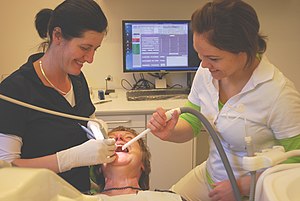
Dentistry, which is a part of stomatology, is the branch of medicine that is involved in the evaluation, diagnosis, prevention, and surgical or non-surgical treatment of diseases, disorders and conditions of the oral cavity, maxillofacial area and the adjacent and associated structures and their impact on the human body.[1] Dentistry is widely considered necessary for complete overall health. Those who practice dentistry are known as dentists. The dentist's supporting team aides in providing oral health services, which includes dental assistants, dental hygienists, dental technicians, and dental therapists.


Overview


Dental surgery and treatments
Dentistry usually encompasses very important practices related to the oral cavity. Oral diseases are major public health problems due to their high incidence and prevalence across the globe with the disadvantaged affected more than other socio-economic groups.[2]
Although modern day dental practice centres around prevention, many treatments or interventions are still needed. The majority of dental treatments are carried out to prevent or treat the two most common oral diseases which are dental caries (tooth decay) and periodontal disease (gum disease or pyorrhea). Common treatments involve the restoration of teeth as a treatment for dental caries (fillings), extraction or surgical removal of teeth which cannot be restored, scaling of teeth to treat periodontal problems and endodontic root canal treatment to treat abscessed teeth.
All dentists train for around 4 or 5 years at University and qualify as a 'dental surgeon'. By nature of their general training they can carry out the majority of dental treatments such as restorative (fillings, crowns, bridges), prosthetic (dentures), endodontic (root canal) therapy,periodontal (gum) therapy, and exodontia (extraction of teeth), as well as performing examinations, radiographs (x-rays) and diagnosis. Dentists can also prescribe certain medications such as antibiotics, fluorides, and sedatives but they are not able to prescribe the full range that physicians can.
Dentists need to take additional qualifications or training to carry out more complex treatments such as sedation, oral and maxillofacial surgery, and implants. Whilst the majority of oral diseases are unique and self limiting, some can indicate poor general health,tumours,blood dyscrasias and abnormalities including genetic problems.


Prevention


Dentists also encourage prevention of dental caries through proper hygiene (tooth brushing and flossing), fluoride, and tooth polishing. Dental sealants are plastic materials applied to one or more teeth, for the intended purpose of preventing dental caries (cavities) or other forms of tooth decay. Recognized but less conventional preventive agents include xylitol, which is bacteriostatic,[3] casein derivatives,[4] and proprietary products such as Cavistat BasicMints.[5]


Education and licensing


The first dental school, Baltimore College of Dental Surgery, opened in Baltimore, Maryland, USA in 1840. Philadelphia Dental College was founded in 1863 and is the second in the United States. In 1907 Temple University accepted a bid to incorporate the school.
Studies showed that dentists graduated from different countries,[6] or even from different dental schools in one country,[7] may have different clinical decisions for the same clinical condition. For example, dentists graduated from Israeli dental schools may recommend more often for the removal of asymptomatic impacted third molar (wisdom teeth) than dentists graduated from Latin American or Eastern European dental schools.[8]
In the United Kingdom of Great Britain and Ireland, the 1878 British Dentists Act and 1879 Dentists Register limited the title of "dentist" and "dental surgeon" to qualified and registered practitioners.[9][10] However, others could legally describe themselves as "dental experts" or "dental consultants".[11] The practice of dentistry in the United Kingdom became fully regulated with the 1921 Dentists Act, which required the registration of anyone practicing dentistry.[12] The British Dental Association, formed in 1880 with Sir John Tomes as president, played a major role in prosecuting dentists practising illegally.[9]
In Korea, Taiwan, Japan, Sweden, Germany, the United States, and Canada, a dentist is a healthcare professional qualified to practice dentistry after graduating with a degree of either Doctor of Dental Surgery (DDS) or Doctor of Dental Medicine (DMD). This is equivalent to the Bachelor of Dental Surgery/Baccalaureus Dentalis Chirurgiae (BDS, BDent, BChD, BDSc) that is awarded in the UK and British Commonwealth countries. In most western countries, to become a qualified dentist one must usually complete at least four years of postgraduate study[citation needed]; within the European Union the education has to be at least five years. Dentists usually complete between five and eight years of post-secondary education before practising. Though not mandatory, many dentists choose to complete an internship or residency focusing on specific aspects of dental care after they have received their dental degree.


History


The Indus Valley Civilization has yielded evidence of dentistry being practiced as far back as 7000 BC.[13] This earliest form of dentistry involved curing tooth related disorders with bow drills operated, perhaps, by skilled bead craftsmen.[14] The reconstruction of this ancient form of dentistry showed that the methods used were reliable and effective.[15]
A Sumerian text from 5000 BC describes a "tooth worm" as the cause of dental caries.[16] Evidence of this belief has also been found in ancient India, Egypt, Japan, and China. The legend of the worm is also found in the writings of Homer, and as late as the 14th century AD the surgeon Guy de Chauliac still promoted the belief that worms cause tooth decay.[17]
The Edwin Smith Papyrus, written in the 17th century BC but which may reflect previous manuscripts from as early as 3000 BC, includes the treatment of several dental ailments.[18][19] In the 18th century BC, the Code of Hammurabi referenced dental extraction twice as it related to punishment.[20] Examination of the remains of some ancient Egyptians and Greco-Romans reveals early attempts at dental prosthetics and surgery.[21]
Ancient Greek scholars Hippocrates and Aristotle wrote about dentistry, including the eruption pattern of teeth, treating decayed teeth and gum disease, extracting teeth with forceps, and using wires to stabilize loose teeth and fractured jaws.[22] Some say the first use of dental appliances or bridges comes from the Etruscans from as early as 700 BC.[23] Further research suggested that 3000 B.C. In ancient Egypt, Hesi-Re is the first named “dentist” (greatest of the teeth). The Egyptians bind replacement teeth together with gold wire. Roman medical writer Cornelius Celsus wrote extensively of oral diseases as well as dental treatments such as narcotic-containing emollients and astringents.[24][25]
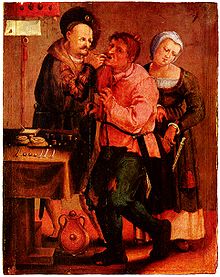
Historically, dental extractions have been used to treat a variety of illnesses. During the Middle Ages and throughout the 19th century, dentistry was not a profession in itself, and often dental procedures were performed by barbers or general physicians. Barbers usually limited their practice to extracting teeth which alleviated pain and associated chronic tooth infection. Instruments used for dental extractions date back several centuries. In the 14th century, Guy de Chauliac invented the dental pelican[26] (resembling a pelican's beak) which was used up until the late 18th century. The pelican was replaced by the dental key[26] which, in turn, was replaced by modern forceps in the 20th century.[citation needed]
The first book focused solely on dentistry was the "Artzney Buchlein" in 1530,[27] and the first dental textbook written in English was called "Operator for the Teeth" by Charles Allen in 1685.[10] It was between 1650 and 1800 that the science of modern dentistry developed. It is said that the 17th century French physician Pierre Fauchard started dentistry science as we know it today, and he has been named "the father of modern dentistry".[28] Among many of his developments were the extensive use of dental prosthesis, the introduction of dental fillings as a treatment for dental caries and the statement that sugar derivative acids such as tartaric acid are responsible for dental decay.
There has been a problem of quackery in the history of dentistry, and accusations of quackery among some dental practitioners persist today.


Priority patients


UK NHS priority patients include patients with congenital abnormalities (such as cleft palates and hypodontia), patients who have suffered orofacial trauma and those being treated for cancer in the head and neck region. These are treated in a multidisciplinary team approach with other hospital based dental specialities orthodontics and maxillofacial surgery. Other priority patients include those with infections (either third molars or necrotic teeth which can often infect the brain) or avulsed permanent teeth, as well as patients with a history of smoking or smokeless tobacco with ulcers in the oral cavity also.


References


^ Dentistry Definitions, hosted on the American Dental Association website. Page accessed 30 May 2010. This definition was adopted the association's House of Delegates in 1997.
^ The World Oral Health Report 2003: continuous improvement of oral health in the 21st century – the approach of the WHO Global Oral Health Programme
^ American Academy of Pediatric Dentistry. (2006) Policy on the Use of Xylitol in Caries Prevention.
^ Azarpazhooh, A.; Limeback, H. (1 July 2008). "Clinical Efficacy of Casein Derivatives: A Systematic Review of the Literature". The Journal of the American Dental Association (Am Dental Assoc) 139 (7): 915. PMID 18594077.
^ "Experimental chewy mint beats tooth decay". Dentistry.co.uk. 2008-04-09. Retrieved 2010-04-18.
^ Zadik Yehuda, Levin Liran (January 2008). "Clinical decision making in restorative dentistry, endodontics, and antibiotic prescription". J Dent Educ 72 (1): 81–6. PMID 18172239.
^ Zadik Yehuda, Levin Liran (April 2006). "Decision making of Hebrew University and Tel Aviv University Dental Schools graduates in every day dentistry--is there a difference?". J Isr Dent Assoc 23 (2): 19–23. PMID 16886872.
^ Zadik Yehuda, Levin Liran (April 2007). "Decision making of Israeli, East European, and South American dental school graduates in third molar surgery: is there a difference?". J Oral Maxillofac Surg 65 (4): 658–62. doi:10.1016/j.joms.2006.09.002. PMID 17368360. Retrieved 2008-07-16.
^ a b Gelbier, Stanley. 125 Years of Developments in Dentistry. British Dental Journal (2005); 199, 470-473. Page accessed 11 December 2007. The 1879 register is referred to as the "Dental Register".
^ a b The story of dentistry: Dental History Timeline, hosted on the British Dental Association website. Page accessed 2 March 2010.
^ "Failure of Act". The Glasgow Herald. 8 February 1955. Retrieved 2 March 2010.
^ History of Dental Surgery in Edinburgh, hosted on the Royal College of Surgeons of Edinburgh website. Page accessed 11 December 2007.
^ Coppa, A. et al. 2006. Early Neolithic tradition of dentistry. Nature. Volume 440. 6 April 2006.
^ BBC (2006). Stone age man used dentist drill.
^ MSNBC (2008). Dig uncovers ancient roots of dentistry.
^ History of Dentistry: Ancient Origins, hosted on the American Dental Association website. Page accessed 9 January 2007.
^ Suddick, Richard P. and Norman O. Harris. "Historical Perspectives of Oral Biology: A Series". Critical Reviews in Oral Biology and Medicine, 1(2), pages 135-151, 1990.
^ Arab, M. Sameh. Medicine in Ancient Egypt. Page accessed 15 December 2007.
^ Ancient Egyptian Dentistry, hosted on the University of Oklahoma website. Page accessed 15 December 2007.
^ Wilwerding, Terry. History of Dentistry, hosted on the Creighton University School of Dentistry website, page 4. Page accessed 15 December 2007.
^ "Medicine in Ancient Egypt 3". Arabworldbooks.com. Retrieved 2010-04-18.
^ History of Dentistry Ancient Origins[dead link]
^ "History of Dentistry Research Page, Newsletter". Rcpsg.ac.uk. Retrieved 2010-04-18.
^ "Dentistry - Skill And Superstition". Science.jrank.org. Retrieved 2010-04-18.
^ "Dental Treatment in the Ancient Times". Dentaltreatment.org.uk. Retrieved 2010-04-18.
^ a b "Antique Dental Instruments". Dmd.co.il. Retrieved 2010-04-18.
^ History of Dentistry Middle Ages[dead link]
^ History of Dentistry Articles[dead link]
^ Ring, Malvin E (1998). "Quackery in Dentistry -- Past and Present". Journal of the California Dental Association. Retrieved 21 March 2009.


Dentistry

Dentistry, which is a part of stomatology, is the branch of medicine that is involved in the evaluation, diagnosis, prevention, and surgical or non-surgical treatment of diseases, disorders and conditions of the oral cavity, maxillofacial area and the adjacent and associated structures and their impact on the human body.[1] Dentistry is widely considered necessary for complete overall health. Those who practice dentistry are known as dentists. The dentist's supporting team aides in providing oral health services, which includes dental assistants, dental hygienists, dental technicians, and dental therapists.


Overview


Dental surgery and treatments
Dentistry usually encompasses very important practices related to the oral cavity. Oral diseases are major public health problems due to their high incidence and prevalence across the globe with the disadvantaged affected more than other socio-economic groups.[2]
Although modern day dental practice centres around prevention, many treatments or interventions are still needed. The majority of dental treatments are carried out to prevent or treat the two most common oral diseases which are dental caries (tooth decay) and periodontal disease (gum disease or pyorrhea). Common treatments involve the restoration of teeth as a treatment for dental caries (fillings), extraction or surgical removal of teeth which cannot be restored, scaling of teeth to treat periodontal problems and endodontic root canal treatment to treat abscessed teeth.
All dentists train for around 4 or 5 years at University and qualify as a 'dental surgeon'. By nature of their general training they can carry out the majority of dental treatments such as restorative (fillings, crowns, bridges), prosthetic (dentures), endodontic (root canal) therapy,periodontal (gum) therapy, and exodontia (extraction of teeth), as well as performing examinations, radiographs (x-rays) and diagnosis. Dentists can also prescribe certain medications such as antibiotics, fluorides, and sedatives but they are not able to prescribe the full range that physicians can.
Dentists need to take additional qualifications or training to carry out more complex treatments such as sedation, oral and maxillofacial surgery, and implants. Whilst the majority of oral diseases are unique and self limiting, some can indicate poor general health,tumours,blood dyscrasias and abnormalities including genetic problems.


Prevention


Dentists also encourage prevention of dental caries through proper hygiene (tooth brushing and flossing), fluoride, and tooth polishing. Dental sealants are plastic materials applied to one or more teeth, for the intended purpose of preventing dental caries (cavities) or other forms of tooth decay. Recognized but less conventional preventive agents include xylitol, which is bacteriostatic,[3] casein derivatives,[4] and proprietary products such as Cavistat BasicMints.[5]


Education and licensing


The first dental school, Baltimore College of Dental Surgery, opened in Baltimore, Maryland, USA in 1840. Philadelphia Dental College was founded in 1863 and is the second in the United States. In 1907 Temple University accepted a bid to incorporate the school.
Studies showed that dentists graduated from different countries,[6] or even from different dental schools in one country,[7] may have different clinical decisions for the same clinical condition. For example, dentists graduated from Israeli dental schools may recommend more often for the removal of asymptomatic impacted third molar (wisdom teeth) than dentists graduated from Latin American or Eastern European dental schools.[8]
In the United Kingdom of Great Britain and Ireland, the 1878 British Dentists Act and 1879 Dentists Register limited the title of "dentist" and "dental surgeon" to qualified and registered practitioners.[9][10] However, others could legally describe themselves as "dental experts" or "dental consultants".[11] The practice of dentistry in the United Kingdom became fully regulated with the 1921 Dentists Act, which required the registration of anyone practicing dentistry.[12] The British Dental Association, formed in 1880 with Sir John Tomes as president, played a major role in prosecuting dentists practising illegally.[9]
In Korea, Taiwan, Japan, Sweden, Germany, the United States, and Canada, a dentist is a healthcare professional qualified to practice dentistry after graduating with a degree of either Doctor of Dental Surgery (DDS) or Doctor of Dental Medicine (DMD). This is equivalent to the Bachelor of Dental Surgery/Baccalaureus Dentalis Chirurgiae (BDS, BDent, BChD, BDSc) that is awarded in the UK and British Commonwealth countries. In most western countries, to become a qualified dentist one must usually complete at least four years of postgraduate study[citation needed]; within the European Union the education has to be at least five years. Dentists usually complete between five and eight years of post-secondary education before practising. Though not mandatory, many dentists choose to complete an internship or residency focusing on specific aspects of dental care after they have received their dental degree.


History


The Indus Valley Civilization has yielded evidence of dentistry being practiced as far back as 7000 BC.[13] This earliest form of dentistry involved curing tooth related disorders with bow drills operated, perhaps, by skilled bead craftsmen.[14] The reconstruction of this ancient form of dentistry showed that the methods used were reliable and effective.[15]
A Sumerian text from 5000 BC describes a "tooth worm" as the cause of dental caries.[16] Evidence of this belief has also been found in ancient India, Egypt, Japan, and China. The legend of the worm is also found in the writings of Homer, and as late as the 14th century AD the surgeon Guy de Chauliac still promoted the belief that worms cause tooth decay.[17]
The Edwin Smith Papyrus, written in the 17th century BC but which may reflect previous manuscripts from as early as 3000 BC, includes the treatment of several dental ailments.[18][19] In the 18th century BC, the Code of Hammurabi referenced dental extraction twice as it related to punishment.[20] Examination of the remains of some ancient Egyptians and Greco-Romans reveals early attempts at dental prosthetics and surgery.[21]
Ancient Greek scholars Hippocrates and Aristotle wrote about dentistry, including the eruption pattern of teeth, treating decayed teeth and gum disease, extracting teeth with forceps, and using wires to stabilize loose teeth and fractured jaws.[22] Some say the first use of dental appliances or bridges comes from the Etruscans from as early as 700 BC.[23] Further research suggested that 3000 B.C. In ancient Egypt, Hesi-Re is the first named “dentist” (greatest of the teeth). The Egyptians bind replacement teeth together with gold wire. Roman medical writer Cornelius Celsus wrote extensively of oral diseases as well as dental treatments such as narcotic-containing emollients and astringents.[24][25]
Historically, dental extractions have been used to treat a variety of illnesses. During the Middle Ages and throughout the 19th century, dentistry was not a profession in itself, and often dental procedures were performed by barbers or general physicians. Barbers usually limited their practice to extracting teeth which alleviated pain and associated chronic tooth infection. Instruments used for dental extractions date back several centuries. In the 14th century, Guy de Chauliac invented the dental pelican[26] (resembling a pelican's beak) which was used up until the late 18th century. The pelican was replaced by the dental key[26] which, in turn, was replaced by modern forceps in the 20th century.[citation needed]
The first book focused solely on dentistry was the "Artzney Buchlein" in 1530,[27] and the first dental textbook written in English was called "Operator for the Teeth" by Charles Allen in 1685.[10] It was between 1650 and 1800 that the science of modern dentistry developed. It is said that the 17th century French physician Pierre Fauchard started dentistry science as we know it today, and he has been named "the father of modern dentistry".[28] Among many of his developments were the extensive use of dental prosthesis, the introduction of dental fillings as a treatment for dental caries and the statement that sugar derivative acids such as tartaric acid are responsible for dental decay.
There has been a problem of quackery in the history of dentistry, and accusations of quackery among some dental practitioners persist today.


Priority patients


UK NHS priority patients include patients with congenital abnormalities (such as cleft palates and hypodontia), patients who have suffered orofacial trauma and those being treated for cancer in the head and neck region. These are treated in a multidisciplinary team approach with other hospital based dental specialities orthodontics and maxillofacial surgery. Other priority patients include those with infections (either third molars or necrotic teeth which can often infect the brain) or avulsed permanent teeth, as well as patients with a history of smoking or smokeless tobacco with ulcers in the oral cavity also.


References


^ Dentistry Definitions, hosted on the American Dental Association website. Page accessed 30 May 2010. This definition was adopted the association's House of Delegates in 1997.
^ The World Oral Health Report 2003: continuous improvement of oral health in the 21st century – the approach of the WHO Global Oral Health Programme
^ American Academy of Pediatric Dentistry. (2006) Policy on the Use of Xylitol in Caries Prevention.
^ Azarpazhooh, A.; Limeback, H. (1 July 2008). "Clinical Efficacy of Casein Derivatives: A Systematic Review of the Literature". The Journal of the American Dental Association (Am Dental Assoc) 139 (7): 915. PMID 18594077.
^ "Experimental chewy mint beats tooth decay". Dentistry.co.uk. 2008-04-09. Retrieved 2010-04-18.
^ Zadik Yehuda, Levin Liran (January 2008). "Clinical decision making in restorative dentistry, endodontics, and antibiotic prescription". J Dent Educ 72 (1): 81–6. PMID 18172239.
^ Zadik Yehuda, Levin Liran (April 2006). "Decision making of Hebrew University and Tel Aviv University Dental Schools graduates in every day dentistry--is there a difference?". J Isr Dent Assoc 23 (2): 19–23. PMID 16886872.
^ Zadik Yehuda, Levin Liran (April 2007). "Decision making of Israeli, East European, and South American dental school graduates in third molar surgery: is there a difference?". J Oral Maxillofac Surg 65 (4): 658–62. doi:10.1016/j.joms.2006.09.002. PMID 17368360. Retrieved 2008-07-16.
^ a b Gelbier, Stanley. 125 Years of Developments in Dentistry. British Dental Journal (2005); 199, 470-473. Page accessed 11 December 2007. The 1879 register is referred to as the "Dental Register".
^ a b The story of dentistry: Dental History Timeline, hosted on the British Dental Association website. Page accessed 2 March 2010.
^ "Failure of Act". The Glasgow Herald. 8 February 1955. Retrieved 2 March 2010.
^ History of Dental Surgery in Edinburgh, hosted on the Royal College of Surgeons of Edinburgh website. Page accessed 11 December 2007.
^ Coppa, A. et al. 2006. Early Neolithic tradition of dentistry. Nature. Volume 440. 6 April 2006.
^ BBC (2006). Stone age man used dentist drill.
^ MSNBC (2008). Dig uncovers ancient roots of dentistry.
^ History of Dentistry: Ancient Origins, hosted on the American Dental Association website. Page accessed 9 January 2007.
^ Suddick, Richard P. and Norman O. Harris. "Historical Perspectives of Oral Biology: A Series". Critical Reviews in Oral Biology and Medicine, 1(2), pages 135-151, 1990.
^ Arab, M. Sameh. Medicine in Ancient Egypt. Page accessed 15 December 2007.
^ Ancient Egyptian Dentistry, hosted on the University of Oklahoma website. Page accessed 15 December 2007.
^ Wilwerding, Terry. History of Dentistry, hosted on the Creighton University School of Dentistry website, page 4. Page accessed 15 December 2007.
^ "Medicine in Ancient Egypt 3". Arabworldbooks.com. Retrieved 2010-04-18.
^ History of Dentistry Ancient Origins[dead link]
^ "History of Dentistry Research Page, Newsletter". Rcpsg.ac.uk. Retrieved 2010-04-18.
^ "Dentistry - Skill And Superstition". Science.jrank.org. Retrieved 2010-04-18.
^ "Dental Treatment in the Ancient Times". Dentaltreatment.org.uk. Retrieved 2010-04-18.
^ a b "Antique Dental Instruments". Dmd.co.il. Retrieved 2010-04-18.
^ History of Dentistry Middle Ages[dead link]
^ History of Dentistry Articles[dead link]
^ Ring, Malvin E (1998). "Quackery in Dentistry -- Past and Present". Journal of the California Dental Association. Retrieved 21 March 2009.
bbarb.net. يتم التشغيل بواسطة Blogger.